Business Plan Basics: The People Opportunity Context and Risk Reward

Updated: 7 days ago

How to Build a Start-up, Part 3, Author: Simon Rasalingham, 2026
I wrote two business plans for MEDICA. The first was a three-pronged attack on revolutionising radiology. The second four year later was focused on one.
The focused one built the company.
The first plan came when I was starting MEDICA. I had spent time at Guinness World Records, worked with some talented consultants from Bain, and had an MBA. I came away with a head full of good frameworks, which I used to help shape the idea. The vision was big and covered a lot of ground. Very Bain.
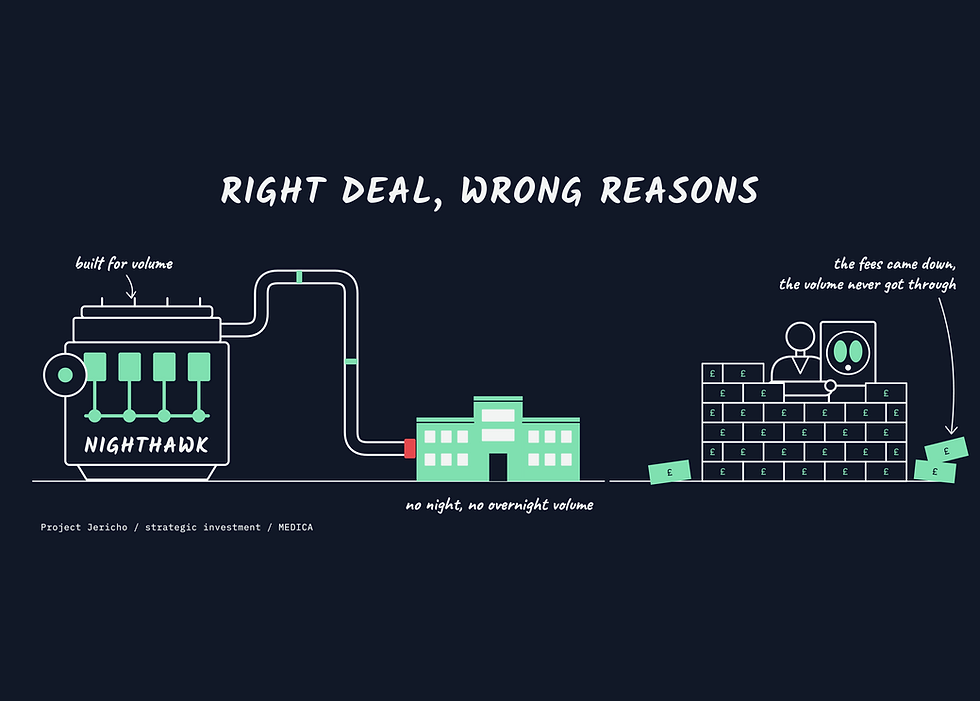
The second plan came just before we took strategic investment from Nuffield Health. By then the opportunity was sharper: outsourced teleradiology reporting. It was also where I learnt to build a financial model and a forecast. That plan focused us and built the engine that became the MEDICA of today. It was strikingly accurate in trajectory, though perhaps not in how long it would take.
The first plan did not fail. Some of it is only now within reach, because the technology it needed, like AI, was not available or accurate enough at the time.
A good business plan makes an idea testable.
A plan is a thinking tool before it is a selling tool
Plenty of templates exist. The one I keep coming back to is from Harvard Business School professor William Sahlman, published in 1997. It has lasted because it covers the parts of a venture that never go out of date: the people, the opportunity, the context, and the risk and reward.
Many founders treat the plan as paperwork. Something for the bank or investors. Something to attach to a pitch. Finish it, save it, forget it.
That is a waste of your time.
A plan that lives only in your head feels complete because nobody has questioned it.
Write it down and the gaps appear. The customer, and how you are going to reach them. The product, what it costs to deliver, and your starting assumptions. The team, and the skills missing.
It shows you those gaps early enough to plan.
A plan is not proof the venture will succeed. It is a structure for improving the odds.
The people decide whether it can be built
Ideas do not build companies. People do.
Ask who is running this, and who else is needed. That means key early hires, advisers, suppliers, partners and financiers. A small team can do a lot, but no team does everything.
So name the gaps and see who can fill them. If you need a technical lead but can't find one, then perhaps a contractor or partner can.
A plan that admits its gaps is usually stronger than one that hides them.
Character matters too. Investors, partners and early hires look for a team that can learn, adapt and stay honest when things change. "We were wrong, so we changed the plan" is a more credible sentence than certainty about everything.
The opportunity separates what you known to the unkowns unkowns
The late Donald Rumsfeld coined this phrase. It took my a while to get my head around but it a small bit of genius
My first plan covered a lot of ground but a lot of unkowns. My second named one thing: outsourced reporting I knew that inside out. That is when the numbers became real, because a narrow opportunity can be modelled, forecast and tested. A wide one mostly cannot.
"Everyone can use this" is the warning sign. Be specific about who the customer is, what problem hurts enough to pay for, what you will charge, what it costs to deliver, and who else is competing for the same money.
Evidence from customers, whether a signed contract or expressed interest, is key.
The biggest risks tend to hide inside statements that sound right but have no real evidence behind them.
Context are factor outside of your control
Interest rates and FX. Labour. Customer habits. Competitors who react. And technology and regulatory statutes.
My first plan was right about where the market could go. Some of what it described needed technology, like AI, that did not exist yet. I am only now working through those opportunities.
You cannot predict context. You can show you understand it well enough to make sensible choices. Keep it clear, not oversell. "The market is huge" means you have no clue.
Write three lists. The market movements or trends helping you. The regulation or market sentiment that can slow you down. The signals to watch, because they may force a change of plan.
Risk and reward keep the plan grounded
Every venture has risk. The danger is pretending it is not there.
Product risk: it is too slow, or there is a better alternative. Market risk: customers do not buy, or buy too slowly. Economic risk: margins are thin, or cash runs out before the business stabilises. People risk: a key dependency on one person. Execution risk: operations get complex and messy as volume grows. Context risk: the rules, costs or technology change.
Give each major risk a mitigation or a plan. Sometimes pieces of string work, that a tech story for another day.
Give the reward equal care. If this works, what does it become? Do margins improve with scale? Does retention create steady revenue? Does it build an asset or a trusted customer base that is hard to copy?
Take more incremental risk only when the reward justifies it. A lot of quick wins compound over time.
Three takeaways
Write down the people, the opportunity, the context and the risk-reward. Mark what you know, with evidence behind it, and what you assume. Breathe in the Donald. The plan should change as the business learns. My first version was too big, full of great ideas but not focused enough. In the end, of the three prongs, one turned into the business that grew the quickest; outsourced teleradiology reporting. Points to remeber:
(1) Every update creates a history of decisions and assumptions. I like to read my old plans. Some feel like serious missed opportunities. Others are simply entertaining.
(2) Narrow the plan until you can model it. Keep the wide version. It may be early, not wrong then nand it to someone you trust and ask them to challenge it. Then update it.
(3) A business plan will not build the business for you. It keeps you aligned with the people, the opportunity, and the full context of the risks and rewards ahead.
It becomes your institutional memory, your vision turned into reality and it actually fun!.
Enjoy the process!
Next: Part 4, Build the Cash Flow Before the Model.
How to Build a Start-up: the full series


Comments